

Low Water Pressure in Liberty Hill & Austin, TX: Causes, Fixes, and When to Call a Plumber
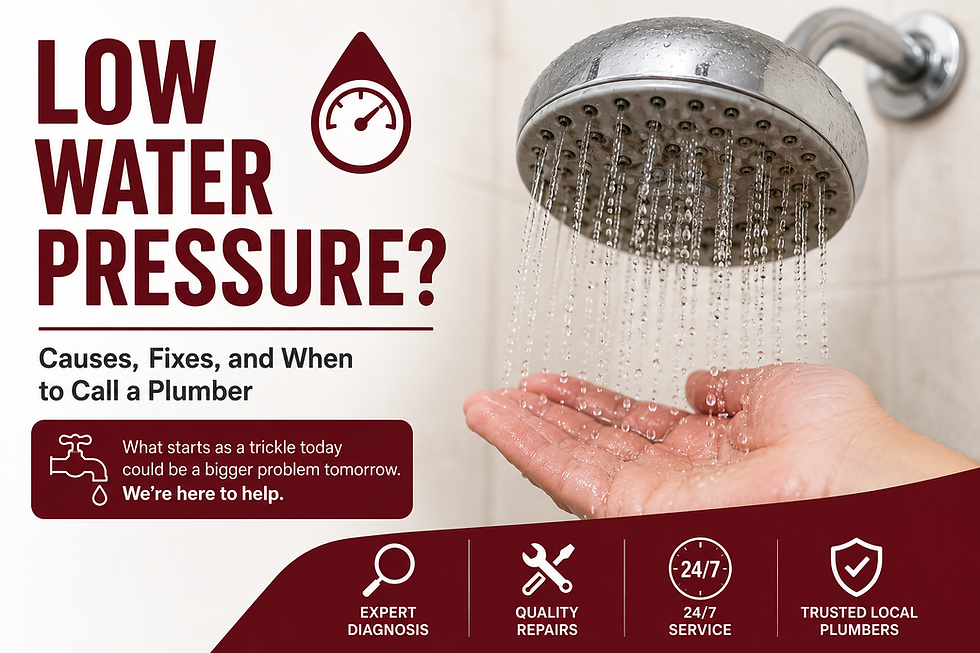
If you’ve ever stepped into the shower expecting a strong stream of water—only to get a weak trickle—you know how frustrating low water pressure can be.
For homeowners in Liberty Hill, Austin, Leander, Bertram, Burnet, Marble Falls, and Bastrop, low water pressure is one of the most common plumbing complaints we hear at OnCall Plumbing.
The good news? It’s usually fixable—and sometimes easier than you think.
Let’s walk through what causes low water pressure, what you can check yourself, and when it’s time to call a professional.
What Is Considered Low Water Pressure?
In most homes, normal water pressure ranges between 40–60 PSI (pounds per square inch).
If your pressure drops below that, you might notice:
Appliances taking longer to fill (washing machine, dishwasher)
Poor shower performance
Inconsistent water flow throughout the house
Low pressure can happen suddenly—or slowly worsen over time depending on the cause.
Common Causes of Low Water Pressure in Texas Homes
1. Mineral Buildup in Pipes or Fixtures
Central Texas water is known for being hard water, meaning it contains high levels of minerals like calcium and magnesium.
Over time, these minerals can:
Build up inside pipes
Clog faucet aerators
Restrict showerheads
This buildup reduces the amount of water that can flow through your plumbing system.
Quick fix: Try unscrewing your faucet aerator or showerhead and soaking it in vinegar to dissolve buildup.
2. Partially Closed Shut-Off Valves
Sometimes the issue is surprisingly simple.
If your home’s main water valve or a fixture shut-off valve isn’t fully open, it can restrict water flow.
This can happen after:
Plumbing repairs
Home inspections
Recent move-ins
What to check: Make sure both your main shut-off valve and water meter valve are fully open.
3. Pressure Regulator Problems
Many homes in Liberty Hill and Austin have a pressure reducing valve (PRV) installed to keep water pressure at a safe level.
If the PRV fails, it can cause:
Sudden drop in water pressure
Fluctuating pressure
Pressure that’s consistently too low
This is not a DIY fix—PRVs require professional adjustment or replacement.
4. Hidden Leaks
Leaks don’t always show up as water on the floor.
A hidden leak (especially under your slab or behind walls) can divert water away from your fixtures, leading to low pressure.
Watch for signs like:
Unexpected increase in water bill
Damp spots or musty smells
Water pooling in your yard
Water coming up through flooring
If you notice any of these, it’s important to act quickly—this could indicate a slab leak, which is common in Texas homes.
5. Corroded or Aging Pipes
Older homes—especially those with galvanized steel pipes—can experience corrosion over time.
As corrosion builds inside pipes, it narrows the passageway for water, reducing pressure.
This issue typically:
Gets worse over time
Affects multiple fixtures
Requires pipe repair or repiping
6. Municipal Supply Issues
Sometimes the problem isn’t inside your home.
City water supply issues in areas like Austin or Liberty Hill can temporarily reduce pressure due to:
Water main repairs
High demand during peak hours
Infrastructure issues
Tip: Ask neighbors if they’re experiencing the same problem. If they are, it’s likely a municipal issue.
7. Water Heater Issues (Hot Water Only)
If you’re only experiencing low pressure with hot water, your water heater could be the culprit.
Common causes include:
Sediment buildup in the tank
Failing components
Partially closed valves
Flushing your water heater annually can help prevent this issue.
Troubleshooting Low Water Pressure: What You Can Do First
Before calling a plumber, try these quick checks:
Check multiple fixtures Is the issue happening everywhere or just one faucet?
Clean aerators and showerheads Mineral buildup is a very common cause.
Verify valves are fully open Especially after recent plumbing work.
Test hot vs. cold water This helps narrow down whether it’s a water heater issue.
Ask neighbors Rule out city-wide problems.
If these steps don’t solve the issue, it’s time for a professional diagnosis.
When to Call a Plumber for Low Water Pressure
You should call a licensed plumber if:
The problem affects your entire home
Pressure dropped suddenly
You suspect a leak
You hear unusual noises in your pipes
DIY fixes haven’t worked
Low water pressure can be a symptom of a bigger issue—and catching it early can save you from costly repairs.
How OnCall Plumbing Diagnoses Low Water Pressure
At OnCall Plumbing, we take a full-system approach to diagnosing pressure problems.
Our process includes:
Testing water pressure levels
Inspecting valves and regulators
Checking for leaks (including slab leaks)
Evaluating pipe condition
Inspecting your water heater
Once we identify the root cause, we’ll walk you through your options—clearly and honestly.
Why Liberty Hill & Austin Homeowners Choose OnCall Plumbing
When you’re dealing with plumbing issues, you want a team that responds fast and gets it right the first time.
Here’s what sets us apart:
24/7 emergency plumbing services
Fast response times across Liberty Hill and Austin
Zero service fees
Honest, upfront recommendations
Experienced local plumbers who understand Texas homes
Whether it’s a simple fix or a more complex issue like a slab leak or failing pressure regulator, we’re here to help.
Don’t Ignore Low Water Pressure
Low water pressure might seem like a minor inconvenience—but it’s often a sign of something bigger happening in your plumbing system.
The sooner you address it, the easier (and more affordable) it is to fix.
Need Help? Call OnCall Plumbing Today
If you’re experiencing low water pressure in Liberty Hill, Austin, Leander, Bertram, Burnet, Marble Falls, Bastrop, or surrounding areas, OnCall Plumbing is ready to help.
📞 Call now for fast service and expert diagnosis💧 Available 24/7 for emergency plumbing needs: https://www.oncallplumbingatx.com/contact-us


Comments